Dutch Kills Green
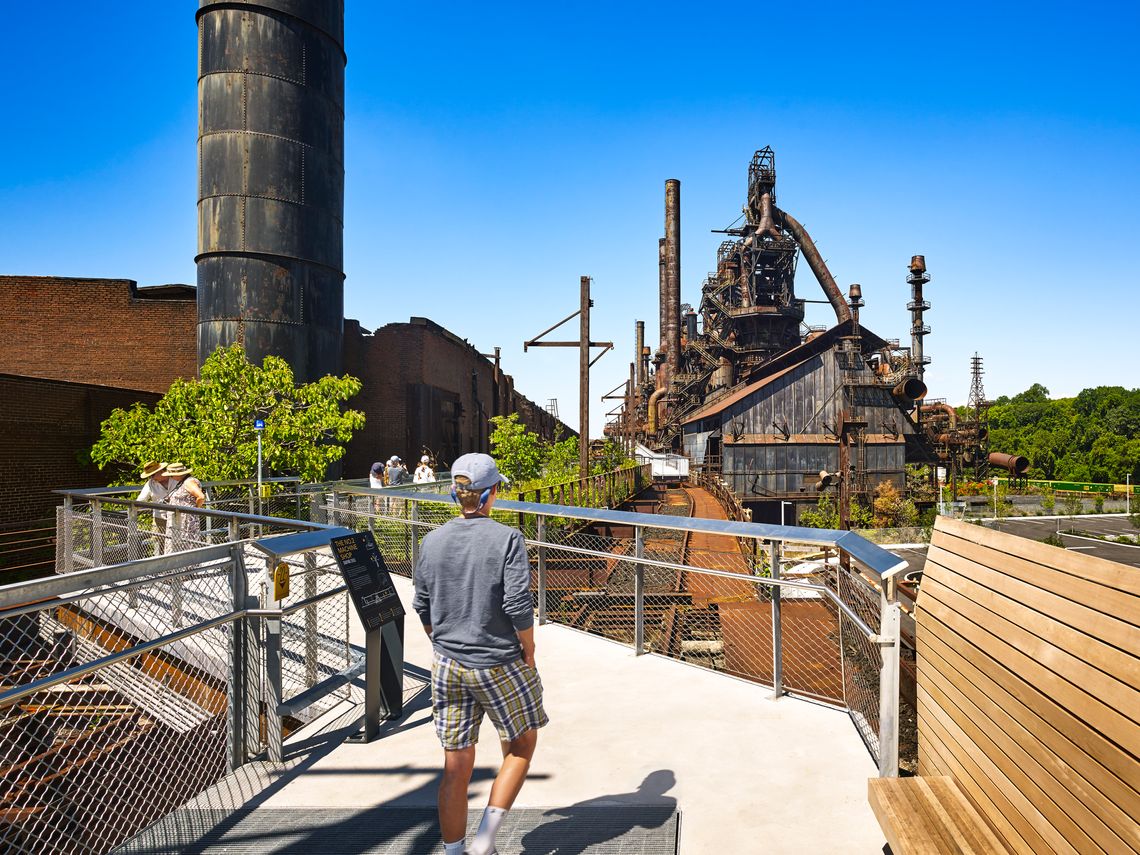
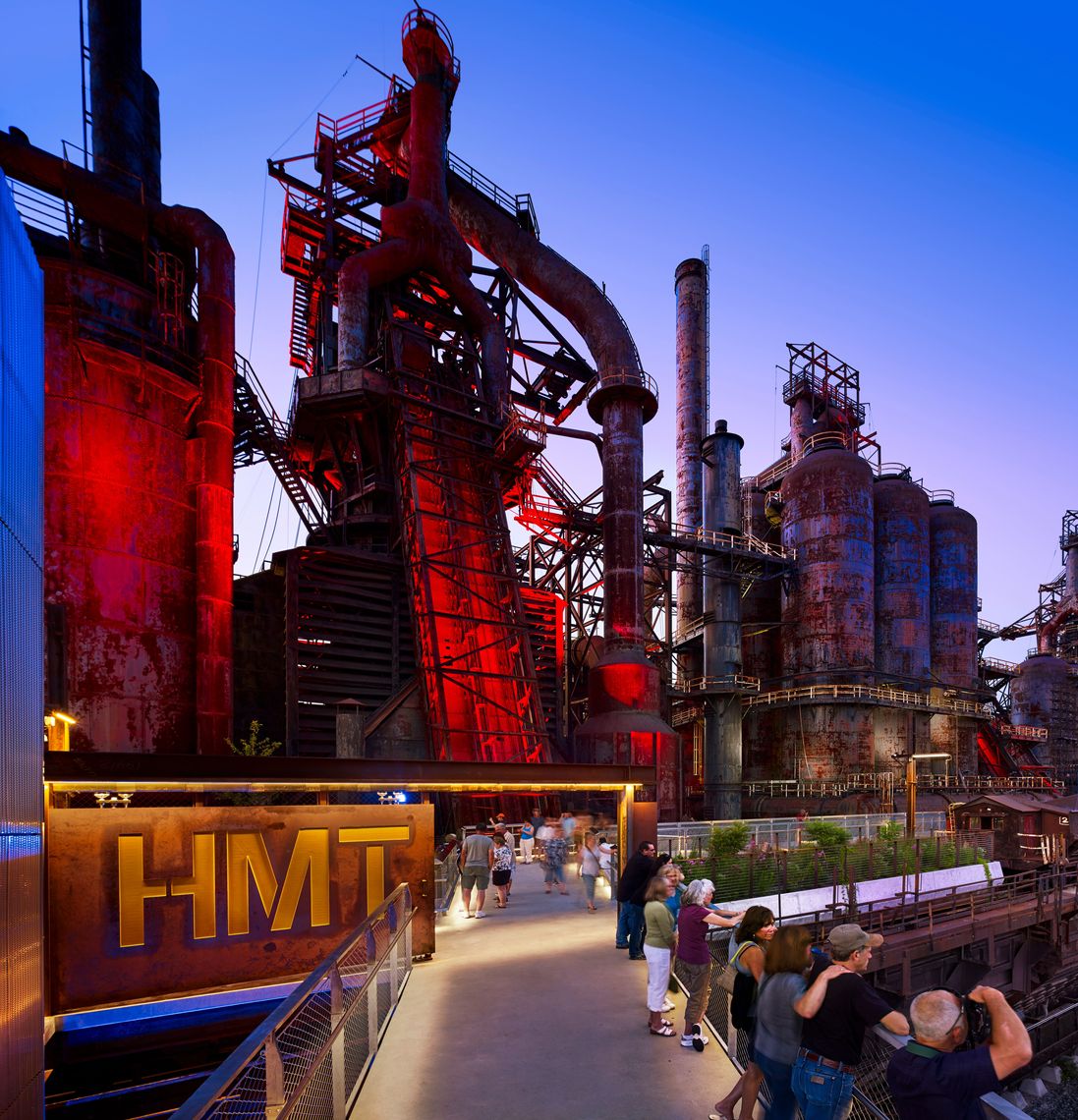
The Bethlehem Steel plant was a powerful symbol of America’s manufacturing leadership in the Industrial Revolution. As the plant expanded into an industrial giant, additional iron ore handling facilities were necessary to increase production. Due to the over-crowding of buildings around the plant’s blast furnaces, the Hoover-Mason Trestle (HMT) was developed to deliver over 90 tons of iron ore daily to the massive blast furnaces which ran continuously - night and day, seven days a week - and required a constant feeding of materials that were heated to over 3000 degrees Fahrenheit. From its completion in 1912 until the Bethlehem Plant ceased operation in 1995, the dual gauge HMT functioned effectively and consistently, and still stands quietly yet prominently as a reminder of its industrial magnificence. Breathing new life into the campus, the Trestle once again provides an up-close, interpretive, and powerfully personal view of the elaborate and complex Bethlehem Steel plant.
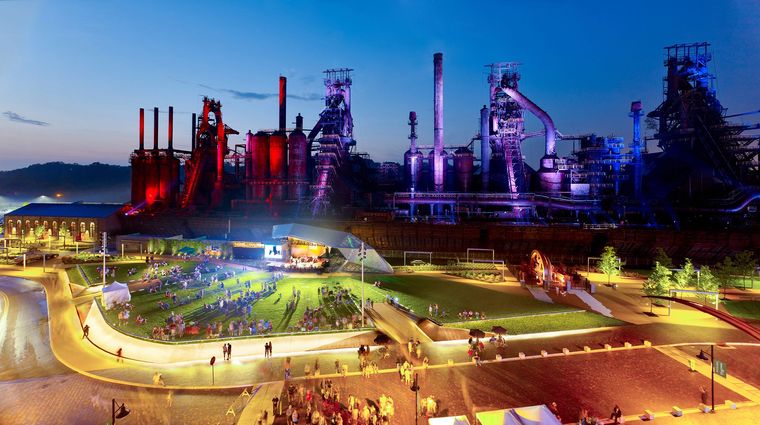
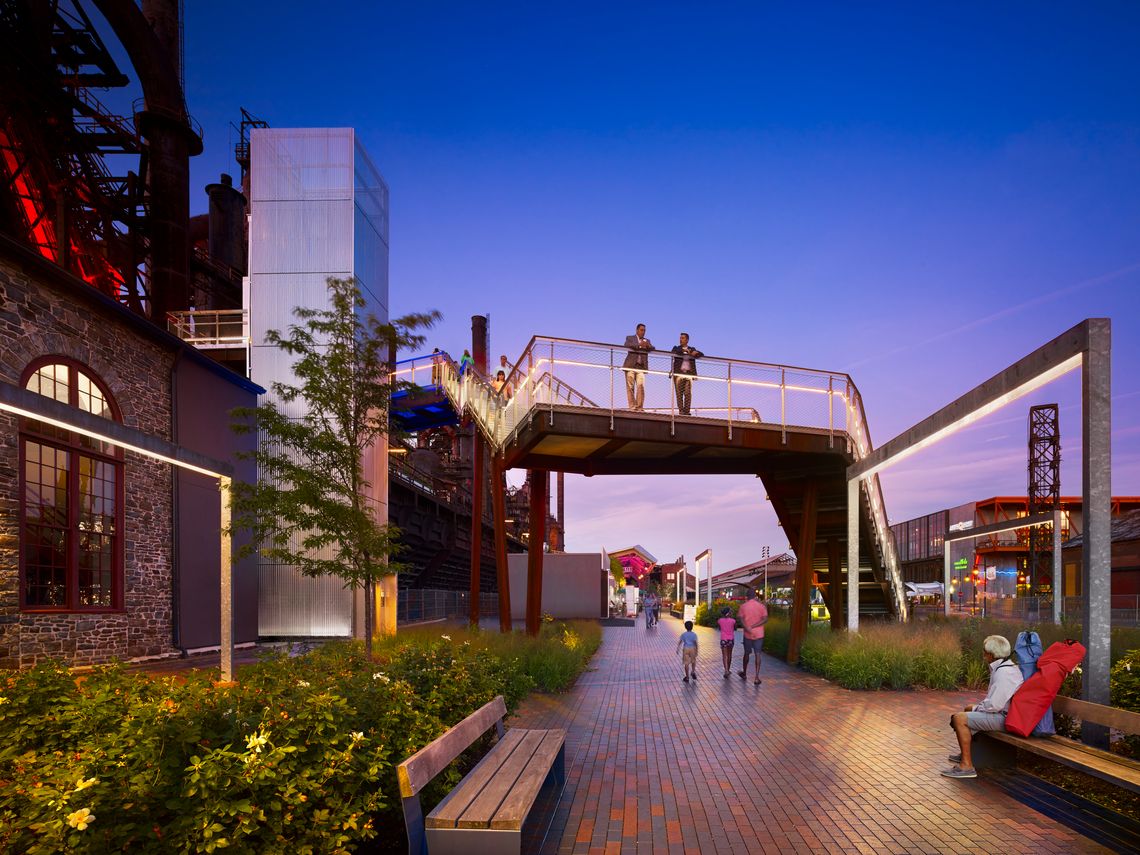
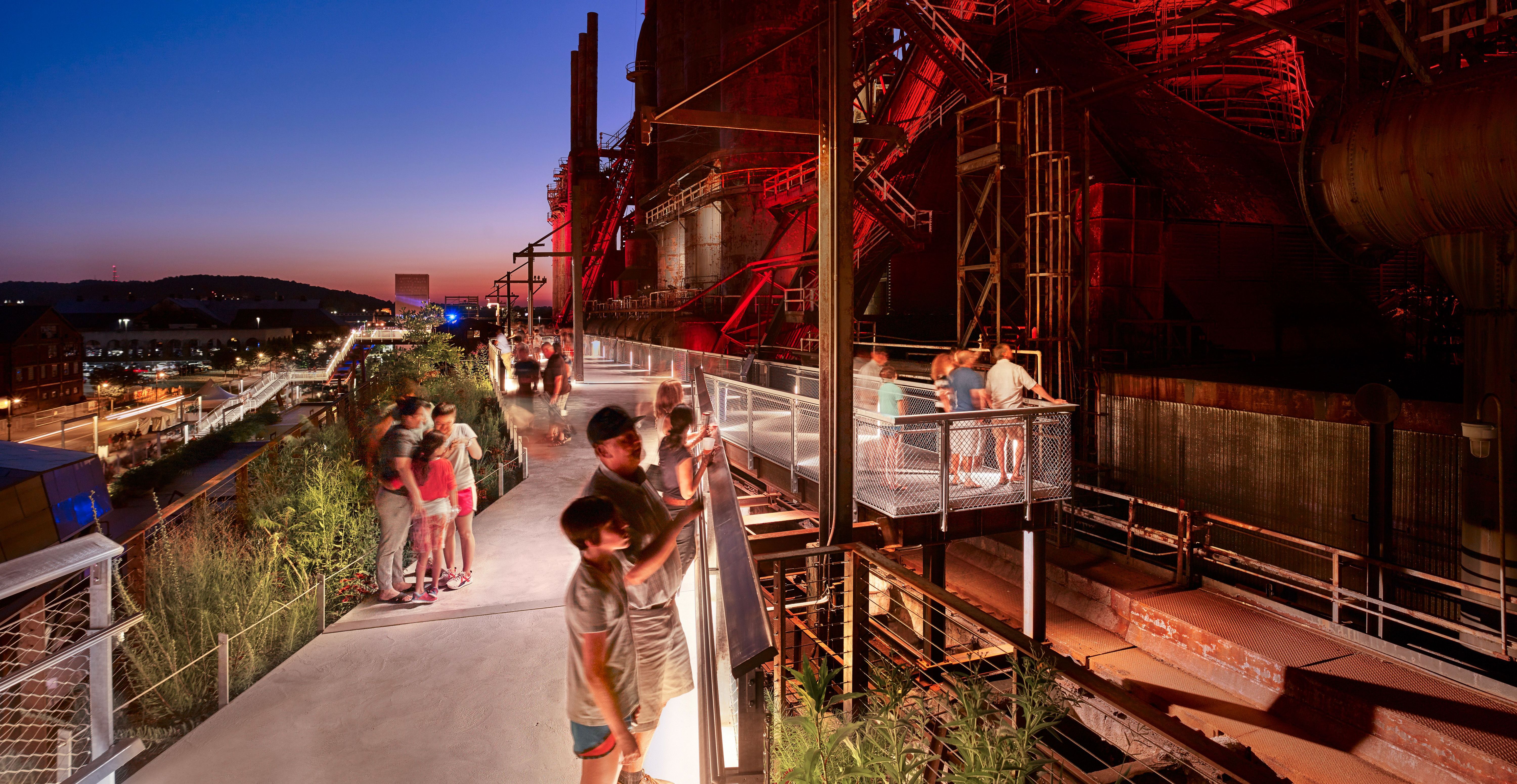
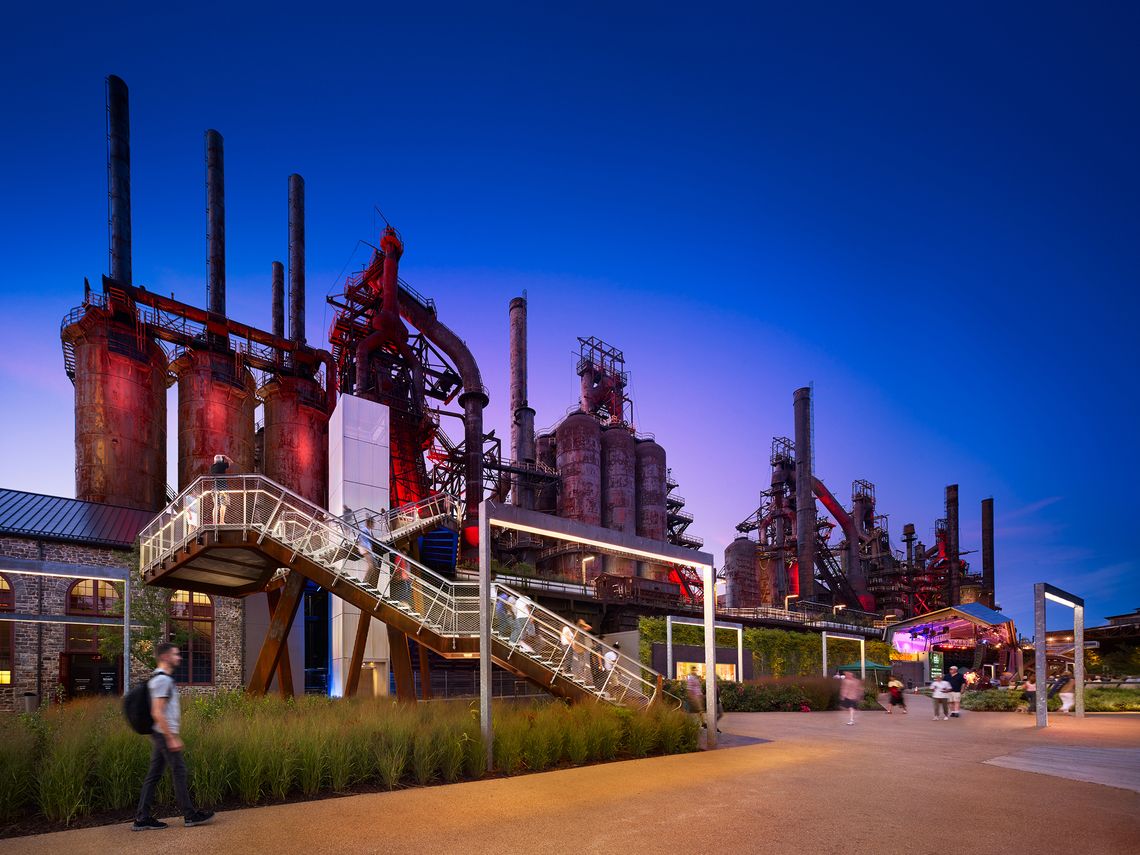
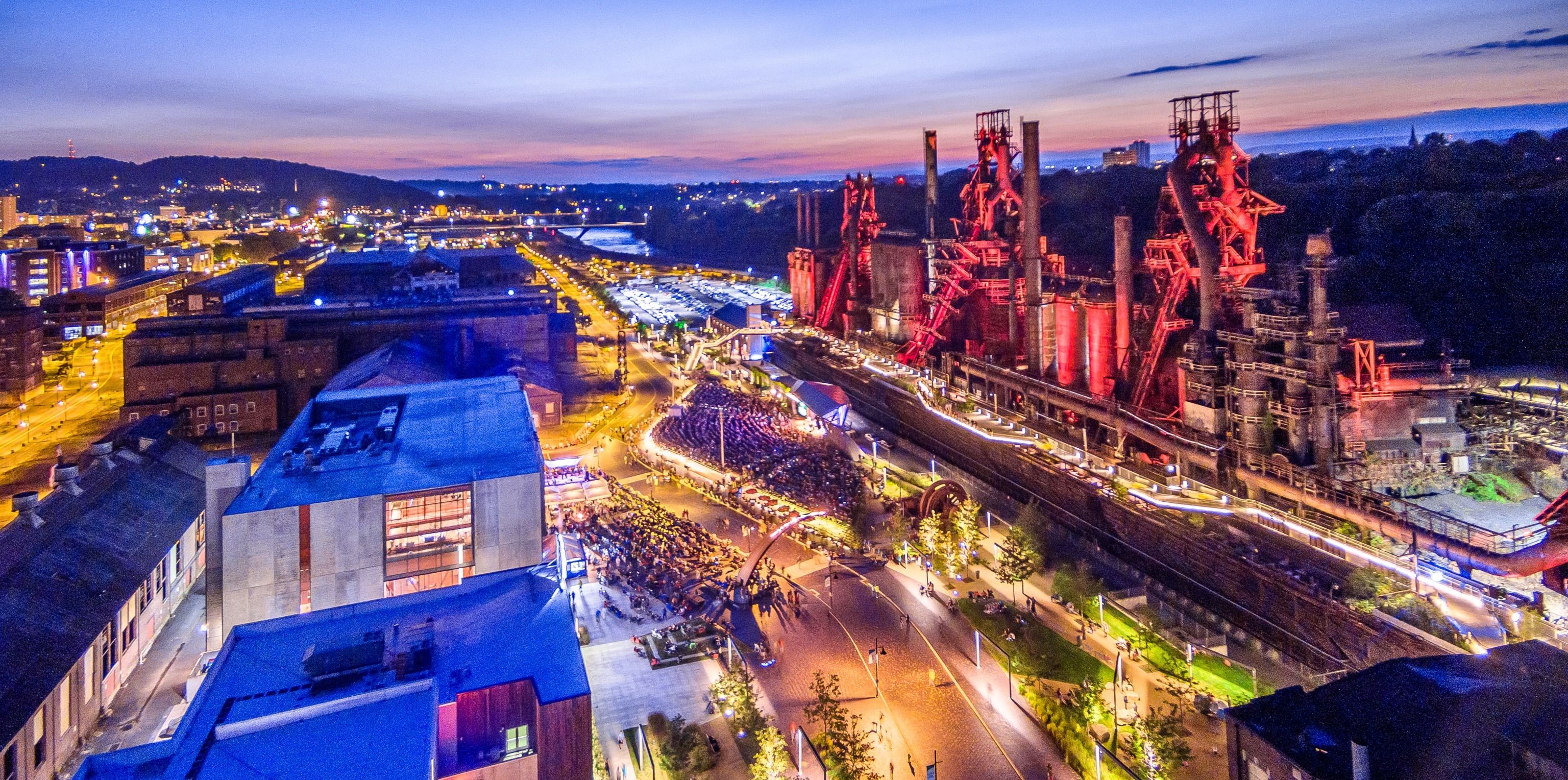
In 2011, the 10-acre central core directly in front of the HMT and blast furnaces was redeveloped into SteelStacks Arts and Cultural Campus. As the next phase of this adaptive reuse success, the HMT reopened in June of 2015 as a repurposed 1/3 mile long elevated pedestrian-oriented promenade that supports circulation, historic interpretation and passive recreation and entertainment uses.
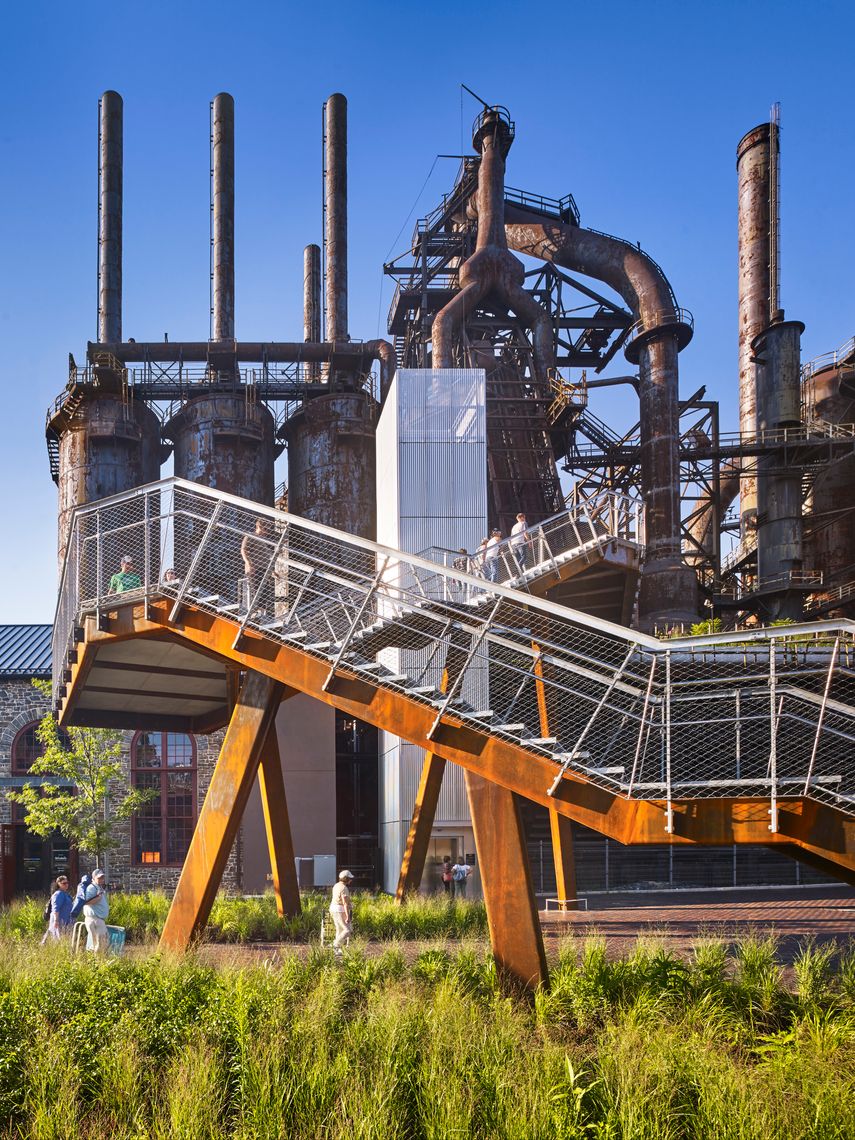
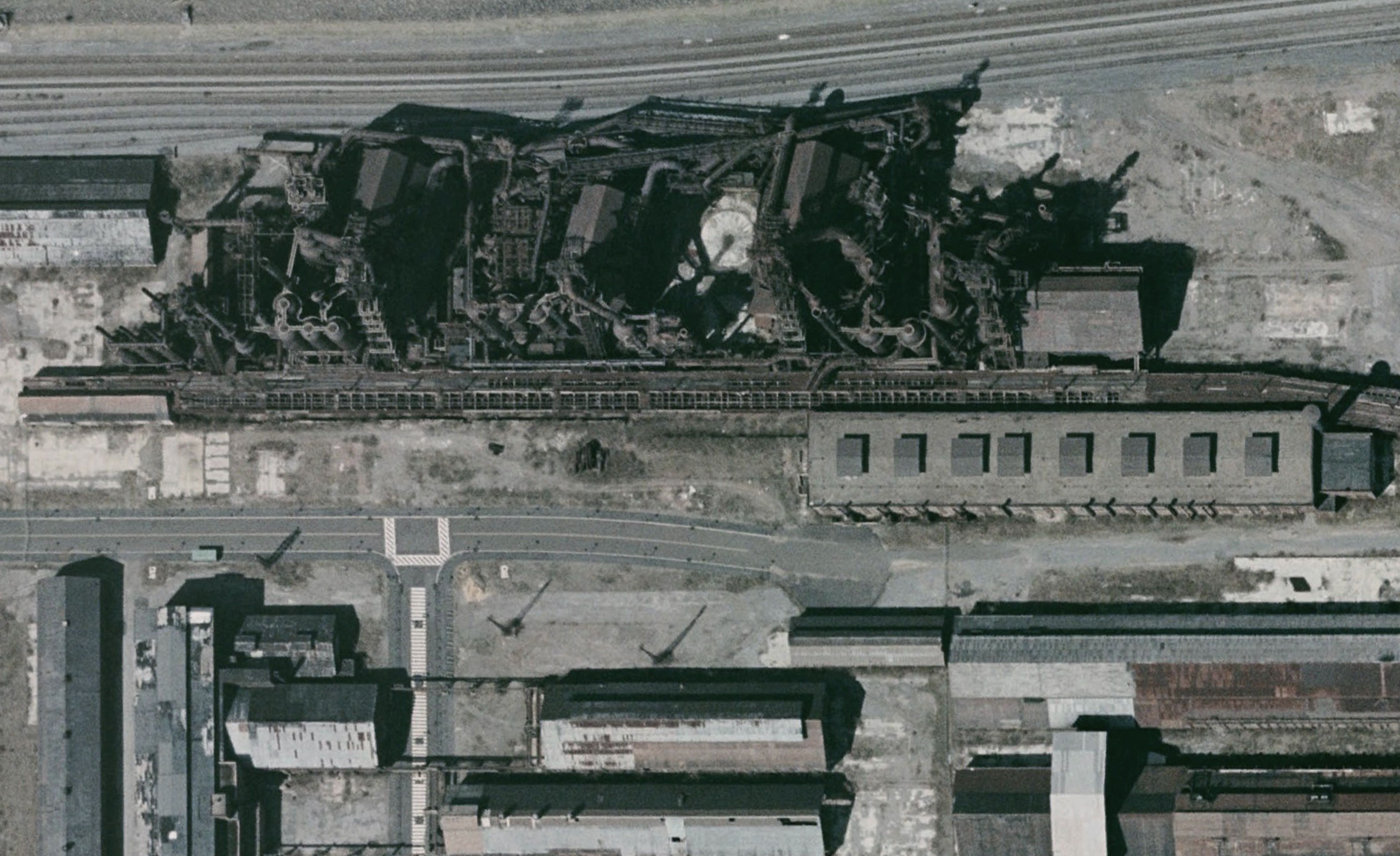
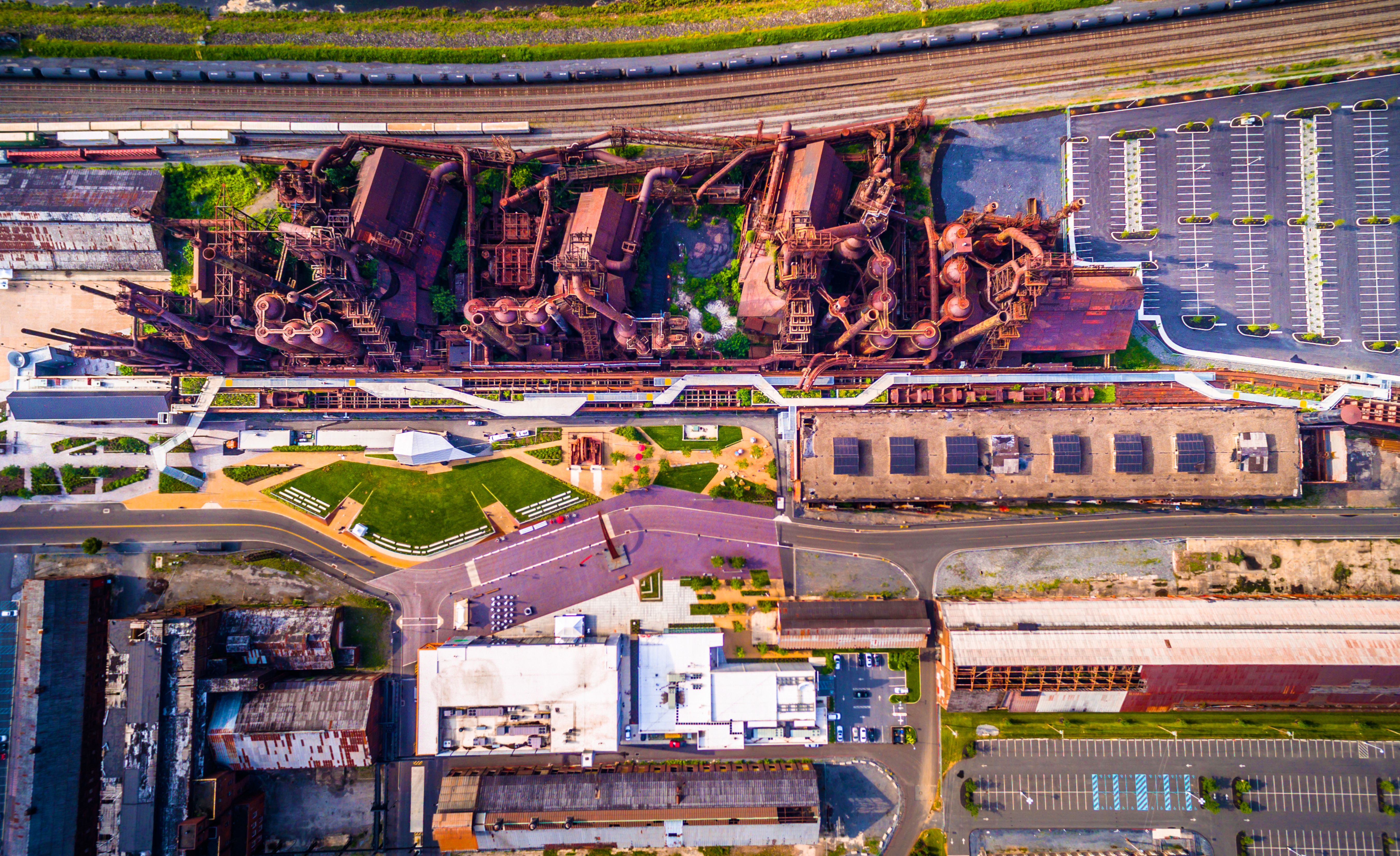
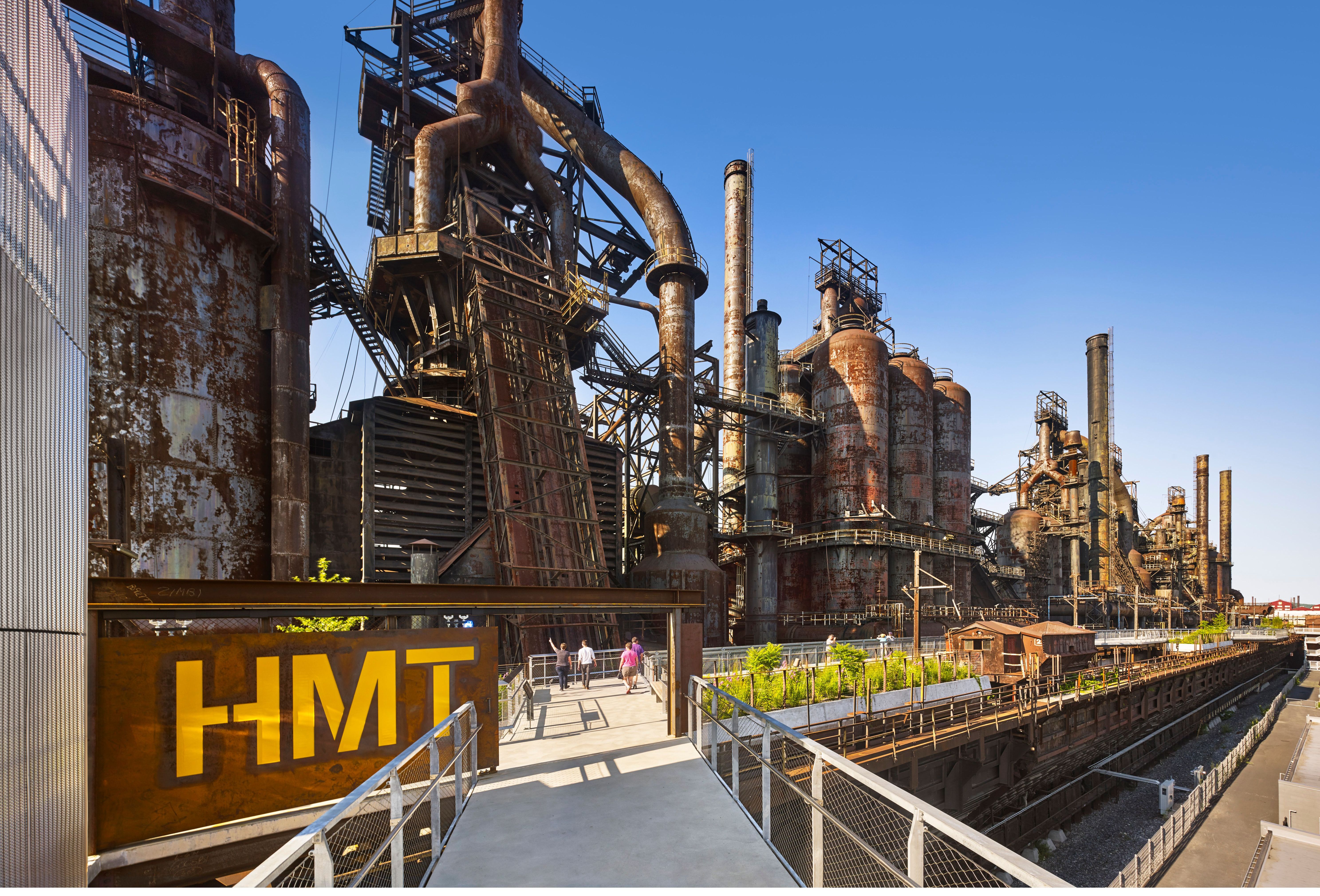
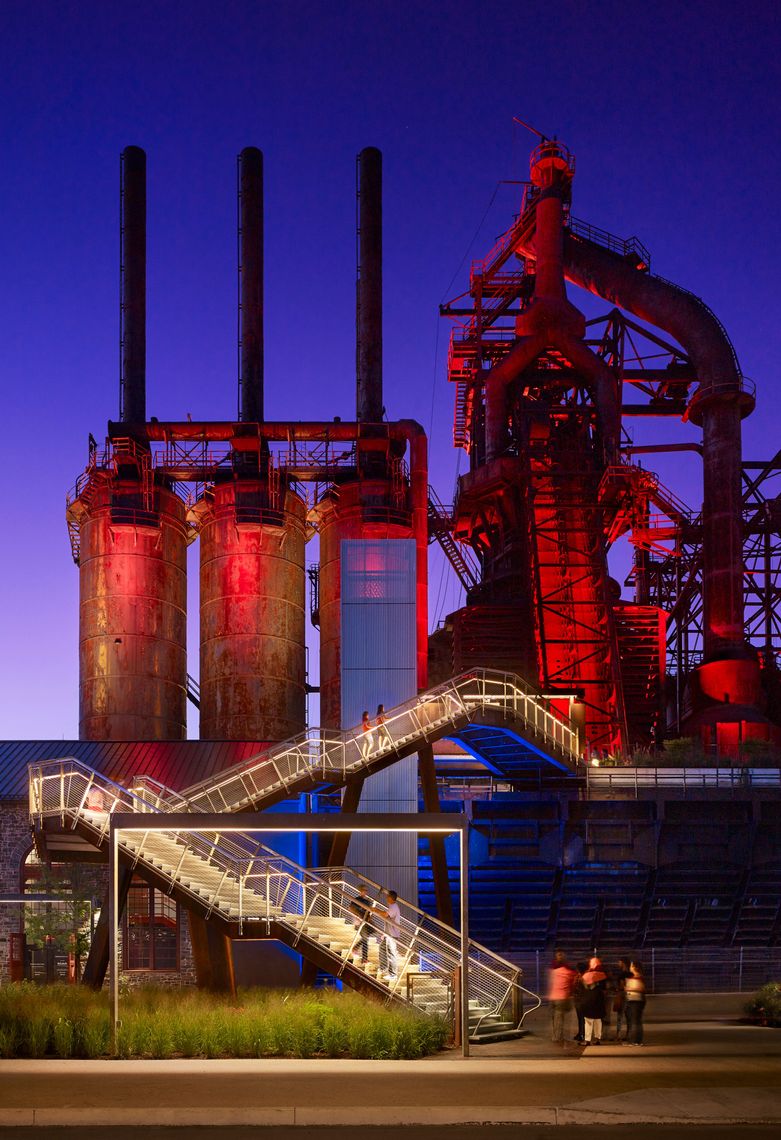
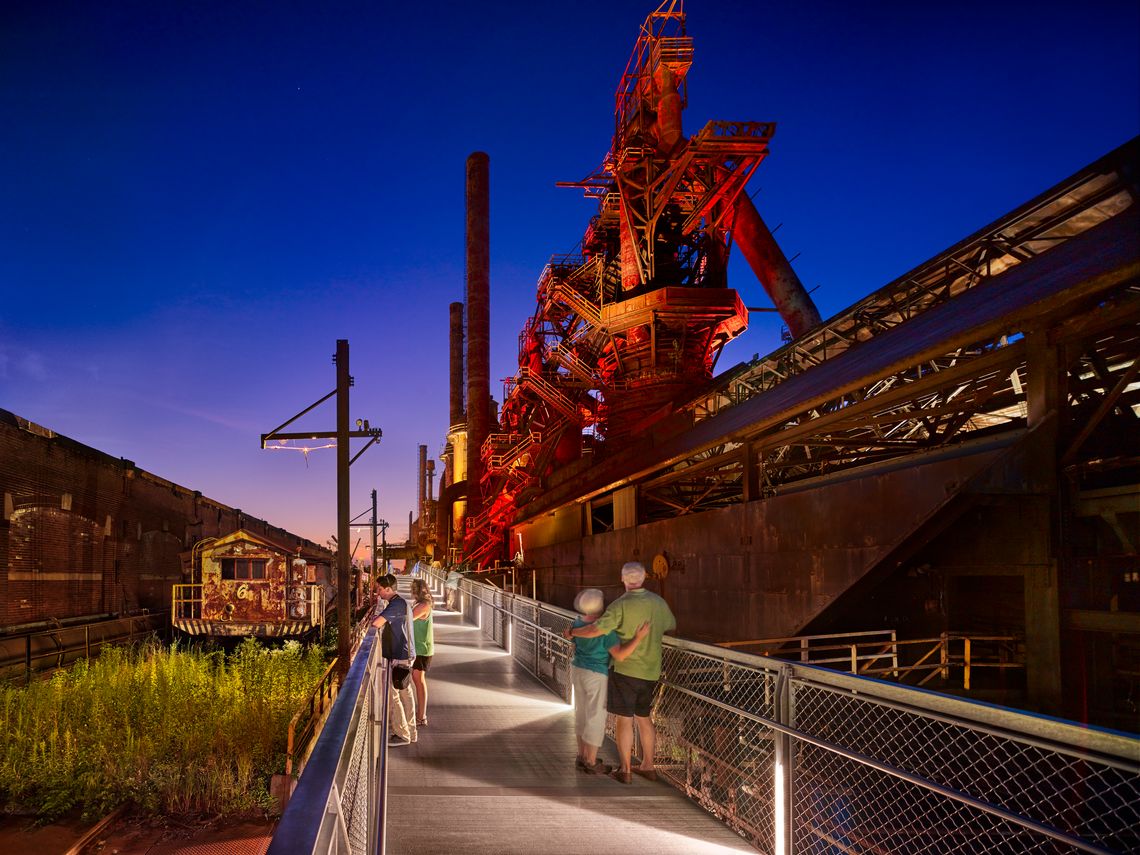
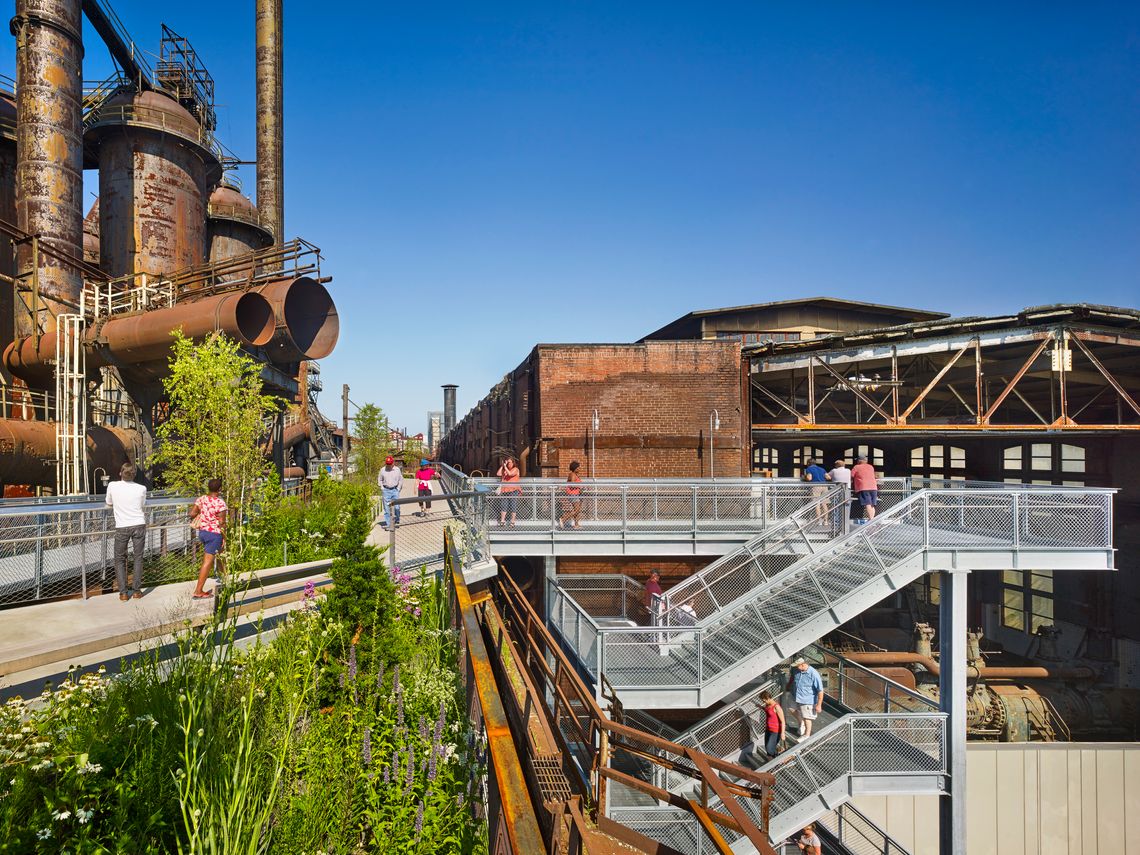
At every point along the HMT, one’s focus is pulled above, below, and outward across the datum of the existing rail tracks. These new components vary not only in their materiality, but also in their vertical height above the tracks. This unique relationship between the component tectonics offers visitors a revealing and interpretive understanding of the site and design.
Similar to the complex relationships between the HMT and the larger Bethlehem Steel plant, the design of the repurposed Hoover-Mason Trestle creates a three dimensional system of dynamic interactions at a human scale. All new elements were designed at a datum above the existing tracks, creating an archaeological experience over the artifact below.
This allows for a complete experience that pays homage to the site as a historic landmark by treading lightly over the existing structure, while also providing a unique and new pedestrian experience. The walkway offers a glimpse into the rich history of Bethlehem Steel, and is enhanced by a self-guided tour with interpretative physical signage as well as an interactive digital application, accessible on any mobile device, delivering audio tours, oral histories and a database of historical images and interpretive data.
Related Projects
We believe parks and open spaces should improve quality of life, foster economic development, and protect the environment.